
Transfer when the request needs a person’s authority, judgement or live involvement, and the caller has reached the right approved destination. Pass the job, purpose and confirmed callback details with the handoff. If no person accepts, create a visible callback task and give the caller a truthful next step.
What to take away
- A transfer attempt and an accepted handoff are different outcomes.
- Keep pricing, schedule and change approvals with authorized people.
- Test refusals, corrections and unavailable destinations.
Decide what the AI can finish
Separate facts the receptionist may provide from actions it may initiate and decisions it may not make. Approved office hours are a different kind of answer from a promise that a crew will arrive tomorrow. A call about a disputed invoice may require the office even if the caller initially describes it as a simple payment question.
Document the trigger in ordinary language: “If a caller requests a change to an agreed project price, collect the request and route it to the project manager.” Add a named role and fallback. Avoid vague instructions such as “handle important calls appropriately,” which leave too much room for inconsistent behavior.
Send a short handoff packet
A person accepting the call should not have to repeat the whole intake. The packet can be brief: caller, job, confirmed number, reason for transfer, relevant facts and what has already been promised. Mark facts supplied by the caller as reported, particularly when they concern a deadline or approval.
Illustrative example: “Taylor from the Cedar remodel is asking whether a cabinet change can still be made. No price or schedule commitment given. Callback number confirmed. Requests the project manager.” That is more useful than an enthusiastic summary saying the customer’s change has been handled.
| Packet field | Include |
|---|---|
| Identity | Caller, company and job reference |
| Request | What the caller wants a person to decide |
| Boundary | What the receptionist has and has not committed |
| Fallback | Owner and next step if the transfer is unanswered |
Make non-answer a real workflow
Define the maximum attempts and what counts as an accepted handoff. Check whether a destination’s voicemail can be mistaken for a person. A caller hanging up while waiting should create an outcome that someone can review, rather than silently completing the task.
When the first contact is unavailable, the system needs an authorized fallback or a callback queue. Use a response window that the assigned role can meet. If nobody covers a particular period, disclose that accurately. Repeatedly forwarding between the office and an employee’s mobile can create a loop without improving the caller’s situation.
Test the boundary as carefully as the greeting
Ask a tester to demand a discount, claim the owner already approved something, request another project’s details and correct the job halfway through the call. The intended result may be a refusal or a request for human review. A successful test does not mean the AI answered everything.
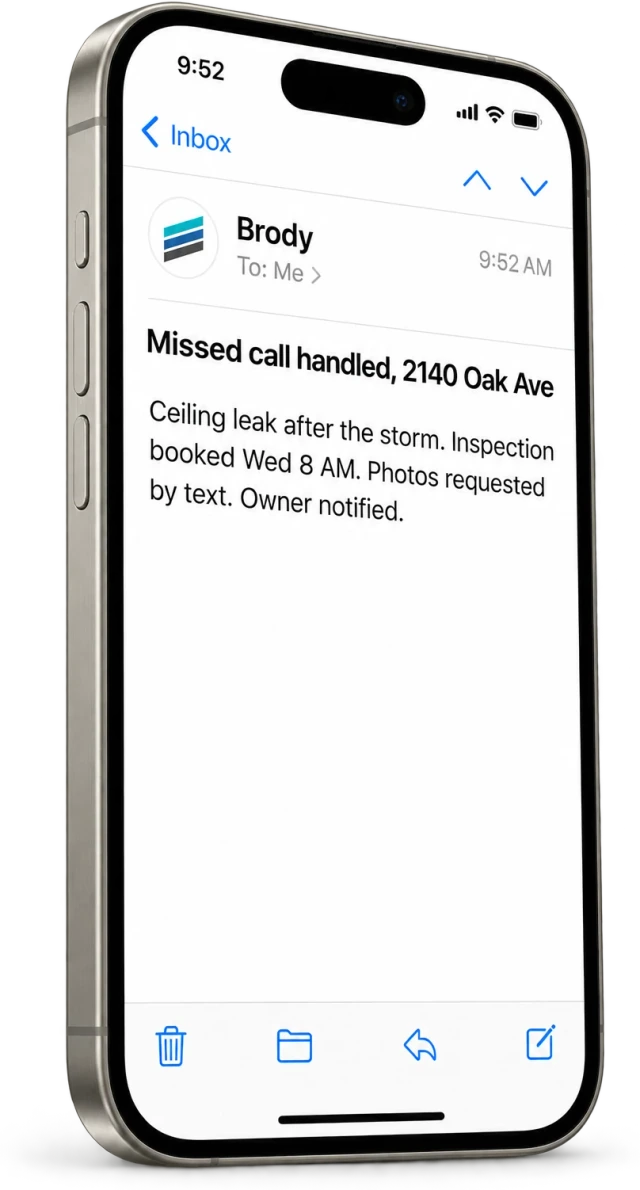
Buildalytic’s receptionist is presented as a way to answer, route and log calls. For your demo, inspect the stored record after both a successful transfer and an unanswered one. Confirm that the next person can identify the original request, take responsibility and close the task without reconstructing it from scattered messages.
Sources: Buildalytic: ai receptionist
Common questions
Should every existing customer be transferred immediately?
Not necessarily. A published office-hours question may be answered directly. A request requiring project authority should go to the appropriate person under your written rules.
What if the caller asks for a person right away?
Give the caller an understandable route to the available human team or callback process. Avoid trapping them in repeated intake questions when a human handoff is the requested outcome.
Sources and editorial notes
Prepared with AI assistance. Reference date: 2026-10-28. Worked examples are illustrative and are not customer results. Product details can change; confirm the current scope and terms before rollout.
How we prepare and update field notesNeed a blank worksheet? Get the free reporting template and receptionist evaluation checklist.
Try it on your own workflow.
Bring your current process and one difficult example. We will walk through the handoff, permissions and exceptions with you.
Start with the call, text or record your team already handles. Review the expected outcome and the human handoff before choosing a rollout.
Book a workflow demo Explore the relevant capability