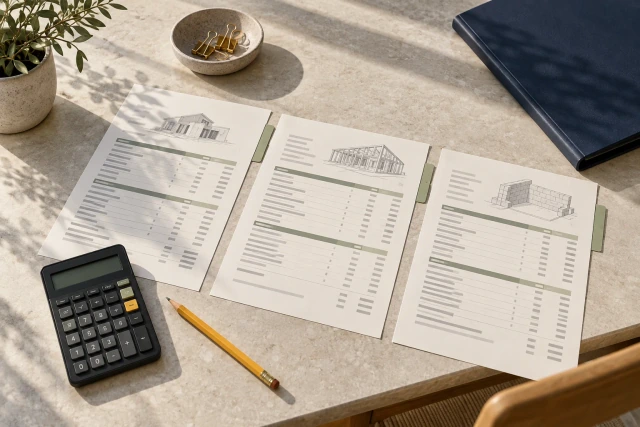
When a change-order request is returned or rejected for missing documentation, preserve the actual response and determine which specific fact, source or submission requirement remains unresolved. Connect the gap to the affected scope and cost line, obtain the appropriate evidence and explain the revision. Keep document completeness separate from scope, entitlement and price decisions. Adding more attachments or reproducing the same total does not by itself answer the reviewer’s question or establish approval.
What to take away
- Read the actual review response before rebuilding the whole packet.
- Distinguish a missing source from a scope, rate or contractual disagreement.
- Show how corrected evidence changes the calculation and revision.
- Preserve the resubmission, receiving record and next substantive decision separately.
Start with the exact return or rejection reason
Preserve the reviewer’s response, affected request number, revision and date. Identify whether the issue is a missing attachment, unclear reference, inaccessible file, scope question or substantive disagreement. A status named rejected may summarize several different situations, so the next action should come from the actual comment and project process.
Do not assume the reviewer wants a complete new archive. If the question concerns one material credit, another hundred photos will not necessarily help. Link the return comment to the specific line or fact it affects and assign the source that can answer it.
Keep the distinction between returned for clarification and a substantive commercial position visible. A coordinator can improve the evidence packet without deciding that a rejection is invalid or that the request becomes payable once the missing file arrives. The actual agreement and authorized review continue to control the commercial outcome.
Sort the gap by the question it prevents the reviewer answering
Identify the question: what changed, who communicated the instruction, what quantity was reported, how the rate was established or how the total was calculated. Use that question to select the relevant source. A file can be present while still failing to explain the relationship the reviewer needs.
Separate an evidence gap from a disagreement about the applicable rule. A reviewer may have the labor record but challenge the proposed rate basis. Requesting the same time sheet again does not resolve that commercial question. Route the actual issue to the estimator or designated contract reviewer with the source references attached.
Preserve ambiguous comments and ask a bounded clarification when necessary. Instead of guessing what more backup means, identify the affected scope or line and ask which missing detail the reviewer needs. A precise answer can prevent the preparer from rebuilding unrelated parts of a packet while the real question remains untouched.
Build a requirement-to-source index for the returned item
Give each relevant requirement or review question a reference to the supporting source, version and location. Include the actual instruction, scope comparison, field record, quantity or rate evidence and calculation where required. The index should explain why each file is included rather than merely list filenames.
Keep the original source distinguishable from the preparer’s summary. A marked-up photo or spreadsheet can help explain an issue while its underlying account remains important. If the source does not establish a detail, preserve that limitation rather than making the summary more confident to satisfy the return comment.
Check recipient access before resubmission. A correct file that the reviewer cannot open is a receiving problem, not necessarily missing field evidence. Use controlled permissions and avoid exposing unrelated commercial records. Preserve the exact shared version so the team can explain what the recipient was able to review.
Recheck the scope and instruction relationship
Identify the baseline and reported additional work within a defined location and period. Link the actual instruction or clarification source. An attachment concerning another area may be legitimate project evidence while failing to support the scope of this request.
Distinguish the reported field account from a commercial conclusion. A signed ticket can document a particular acknowledgment while leaving pricing or authorization questions unresolved. Preserve its exact version and comments instead of summarizing it as approval of every component of the change-order request.
If part of the request concerns ordinary contract work, a credit or a separate event, route the scope allocation to the responsible reviewer. Do not force every source into the same total merely because the original submission grouped the work together. A revised boundary should be explained with its actual evidence and effect on the proposal.
Connect each cost line to quantity, rate and credit sources
Show the quantity and unit, rate basis and source for each proposed cost line. Preserve whether the amount is estimated, quoted, invoiced or otherwise supported. A precise calculation is easier to review when the source type and relevant scope are clear.
Include credits and exclusions explicitly. A return for a missing credit reference can require a changed total, not just another attachment. Ask the source to confirm the relevant amount and identify the pricing rule used for any affected markup. Do not hide a corrected credit inside another cost line to preserve the old cover amount.
Keep arithmetic checking and commercial acceptance separate. The preparer can verify multiplication while a reviewer still needs to determine the allowed basis. Label the proposed calculation accurately and preserve unresolved rate or eligibility questions rather than treating a balanced spreadsheet as proof that the price has been agreed.
Worked example: a corrected credit changes the proposed total
The event, quantities, rates and review history below are fictional. Request R-15 was returned for an unclear material-credit source. Assume the teaching scenario includes 12 labor hours at an invented $85 rate, $300 of materials and $80 of equipment, giving a gross direct amount of $1,400.
The original scenario used a $50 credit and a ten percent markup on the net direct amount: $1,350 plus $135, or $1,485. The corrected fictional source establishes a $100 credit for the revised scenario. Net direct cost becomes $1,300; the same assumed markup becomes $130; the revised proposed total is $1,430.
The $55 reduction consists of the additional $50 credit and its $5 markup effect. The preparer explains that bridge in the revision note instead of resending the original amount with a new attachment. All rates and rules are invented teaching assumptions; the example establishes neither recoverability nor actual approval.
| Revised line | Fictional basis | Proposed amount |
|---|---|---|
| Labor | 12 × invented $85 | $1,020.00 |
| Materials | Example source amount | $300.00 |
| Equipment | Example source amount | $80.00 |
| Gross direct amount | $1,020 + $300 + $80 | $1,400.00 |
| Corrected material credit | Assumed revised source | −$100.00 |
| Net direct amount | $1,400 − $100 | $1,300.00 |
| Example markup | 10% × $1,300 | $130.00 |
| Revised proposed total | $1,300 + $130 | $1,430.00 |
Request the missing evidence from the right source
Give the contact the event, affected line, exact missing detail and appropriate return destination. A supplier can clarify a credit or invoice relationship; a field contact can explain an observation; the estimator can explain a proposed pricing basis. Do not send every question to the person who prepared the original PDF.
If a record does not exist, preserve that fact and ask the responsible reviewer how the issue should proceed. Do not manufacture a receipt, recreate a signature or backdate a field account. A later explanation can be useful while remaining clearly identified as a later source.
When the response arrives, check which question it answers. It may clarify the credit amount without establishing another line’s scope. Keep the answered part and remaining action separate so one received attachment does not accidentally close every issue raised in the return.
Issue a revision with a short, specific change summary
Identify the new revision and its relationship to the returned request. Explain which source changed, which question it addresses and whether the scope or total changed. A reviewer should not have to compare every page to discover that the only numerical difference concerns a material credit.
Clearstory’s public review material describes comments tied to CORs and tracked revisions. Its owner guide also presents review feedback alongside the submitted document. These are vendor-specific examples of traceable review, not a promise that a revised request is approved or a claim that Buildalytic reproduces every feature of another platform.
Preserve the earlier submission and response under their actual statuses. Do not overwrite the original PDF with the corrected amount and leave the same filename without a version record. The commercial history should remain understandable if a later reviewer asks what was submitted, returned and changed.
Sources: Clearstory: change-order review comments and revision history; Clearstory Owner Quick Start Guide: review feedback and submitted records
Have another person follow the revised packet
Ask a reviewer to identify the original question, find its source answer and reproduce the revised total. Check the cover, calculation, attachments and shared links against the same revision. A new worksheet and an old cover PDF can coexist in a folder unless someone checks the set deliberately.
Review duplicate ticket references, conflicting dates, scope overlap and credit treatment where relevant to the request. Focus on the returned issue while checking whether the correction affects another line. Do not broaden a narrow arithmetic correction into an unsupported conclusion that every commercial requirement is satisfied.
Record what the internal review covered and who authorized the outgoing revision. An estimator’s calculation check may differ from contract or commercial approval. Keep those outcomes separate so the resubmission follows the actual project process rather than relying on a generic ready flag.
Track receiving and the next decision after resubmission
Send the approved revision through the required destination with its identifier and concise change summary. Preserve the actual sent set, receiving reference and response. A portal upload can establish a receiving event while the designated reviewer still needs to assess the revised evidence or amount.
If another question arrives, link it to the affected revision and issue. Determine whether the source answered the earlier question or whether the review has moved to a different commercial matter. Avoid sending unchanged backup repeatedly when the unresolved issue now concerns scope, rate or authority.
When a formal decision is made, retain its actual scope, amount and source. A partial agreement should leave the remaining issue visible. Approval, billing and payment remain distinct events; correcting documentation does not itself establish that the proposed amount has been included in an application or received.
Download the blank returned-request review register
The free CSV includes the request and returned revision, actual comment, issue category, affected line, required source, source owner, received clarification, calculation effect, revised packet, internal review and next decision. It is an evidence and routing aid, not a notice form or determination that a rejection is improper.
Enter R-15 and reproduce the $1,485-to-$1,430 scenario bridge. Keep the corrected credit source and $55 difference visible while commercial review remains pending. Test a broken link and a rate-basis disagreement as separate return reasons; neither should automatically trigger a request for more field photos.
Pilot one redacted returned request with the estimator and project administrator. Agree who obtains sources and who authorizes resubmission. Resolve ambiguous issue categories before enabling automated follow-up across a large pending change-order log or several recipients with different submission requirements.
Show the exact missing-evidence chase in Buildalytic
Buildalytic advertises custom workflows for requests, logged follow-up, waits and named approvals. Bring a redacted return comment and the unanswered source question. Ask a demonstration to show the precise request reaching the responsible contact and the response returning to the event and revision reference.
Test a missing credit source, inaccessible attachment and named review wait as different paths. Confirm supported systems, document permissions and the authorized preparer or sender. The workflow should coordinate the evidence without declaring entitlement, approving a price or guaranteeing that a resubmission will be accepted.
The practical test is whether another teammate can trace the return reason, source answer, revised calculation and next reviewer. The fictional example does not establish a recovered amount or a measured Buildalytic customer result. Production follow-up should reflect the actual agreement and authorized project and commercial process.
Common questions
Should every rejected request be rebuilt from scratch?
Start with the actual reason and affected scope. A targeted source or access correction may be needed, while a substantive disagreement requires its own review.
Why did the example total decrease by $55?
The corrected credit increased by $50, and the invented ten percent markup decreased by $5. The revised teaching total is $1,430 rather than $1,485.
Does complete backup guarantee approval?
No. Documentation, scope, entitlement, pricing, authorization, billing and payment have distinct source and decision requirements.
Sources and editorial notes
- Clearstory: change-order review comments and revision history
- Clearstory Owner Quick Start Guide: review feedback and submitted records
- Buildalytic custom construction workflows
Prepared with AI assistance. Reference date: 2026-10-29. Worked examples are illustrative and are not customer results. Product details can change; confirm the current scope and terms before rollout.
How we prepare and update field notesBring the return comment that still needs a source answer
Bring a redacted review comment, affected cost line and one missing source. We will map the evidence request, revised-record handoff and named review using your process and supported connections.
Start with the call, text or record your team already handles. Review the expected outcome and the human handoff before choosing a rollout.
Request a change-order follow-up demo Explore the relevant capability