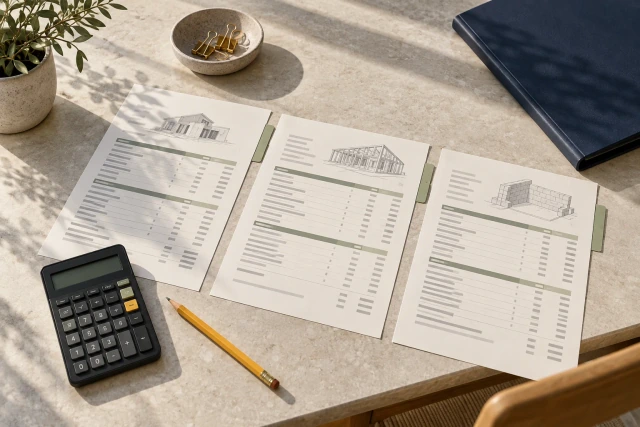
A change-order audit tests whether the scope changed, the price follows the contract, the approval came from the right authority and the resulting amount reached billing correctly. Follow a single event from the baseline drawing to the final payment record, preserving revisions and open questions.
What to take away
- An RFI response, field acknowledgment and commercial approval serve different purposes.
- Test additions, deletions and previously paid scope together.
- Close an exception only against a documented decision.
Establish what was included before the change
Collect the executed scope, relevant drawing revision, specification, exclusions and applicable clarifications. Identify the document hierarchy and the person responsible for interpreting a conflict. The audit packet should describe the original obligation and the alleged change in enough detail that another reviewer can follow the comparison.
Link the field event to a location, date and specific instruction. Avoid treating the existence of an RFI as proof of extra scope. Some RFIs clarify an existing requirement; others lead to a priced revision. Record the responsible team's interpretation and the evidence behind it before moving to the cost test.
Rebuild the price in auditable components
Separate labor, materials, equipment, subcontract costs, credits and markups. For each component, show the source quantity, unit, eligible rate and contractual treatment. Preserve the vendor invoice and the worksheet that transformed it into the requested amount. A subtotal copied from a proposal does not reveal which items were included twice.
Test the sequence of financial markups as well as their percentages. Procore documents distinct horizontal and vertical configurations; the software setting must be compared with the actual agreement. A mathematically correct configuration can still apply the wrong contractual basis. Use the existing markup guide for detailed arithmetic and reserve this audit procedure for the complete control path.
| Component | Test | Required decision |
|---|---|---|
| Scope | Original versus revised obligation | Is this compensable changed work? |
| Quantity | Source measure versus priced measure | Is the quantity supported? |
| Rate | Agreement versus proposed rate | Which rate applies? |
| Credit | Omitted work and material returns | Is the net treatment correct? |
| Markup | Base and sequence | Does configuration match the clause? |
| Billing | Approved amount versus cumulative application | Was the change included once? |
Worked example: a deletion changes the result
In a fictional package, additional installation costs $18,000, materials cost $7,000 and deleted work generates a $4,000 credit. Assume the agreement applies a single 10% markup to the net $21,000 base. The example's reviewed total is $23,100. A worksheet applying markup to the $25,000 addition and omitting the deletion would request $27,500.
The $4,400 difference has two components: the omitted $4,000 credit and $400 of associated markup. Do not assume these rules apply to every additive and deductive change. If the actual contract treats credits differently, recalculate under that clause. Record both the numerical difference and the reviewer-approved interpretation so the next auditor does not mistake an assumption for a settled rule.
Issue a finding the project team can resolve
Write each finding as a short question with the source clause, record reference, amount, proposed correction and decision owner. Give the contractor an opportunity to provide omitted evidence or explain the pricing basis. Preserve disagreement and any subsequent amendment.
Then trace the agreed result into the system of record and the affected payment period. Keep a proposed price reduction separate from an executed change and a posted credit. Buildalytic's current workflow offering can support requests, reminders and approval handoffs; any independent pricing audit or connector should be scoped explicitly. A successful trial ends with an inspectable decision, including justified clean items, rather than a longer list of unresolved flags.
Common questions
Can a reviewer approve a change from the total alone?
The total may support an initial screen, but a defensible price review needs the relevant scope, quantities, rates, credits, markup basis and authority evidence.
Should a pending change be removed from the audit register?
No. Preserve its pending status and next decision. Pending work is not automatically an authorized contract increase.
Sources and editorial notes
Prepared with AI assistance. Reference date: 2026-11-05. Worked examples are illustrative and are not customer results. Product details can change; confirm the current scope and terms before rollout.
How we prepare and update field notesScope one evidence-backed review workflow.
Bring a redacted contract, payment packet and one unresolved question. Discuss the supported collection and follow-up steps, any additional scope and the human review needed to validate the result.
Start with the call, text or record your team already handles. Review the expected outcome and the human handoff before choosing a rollout.
Discuss your review workflow Explore the relevant capability