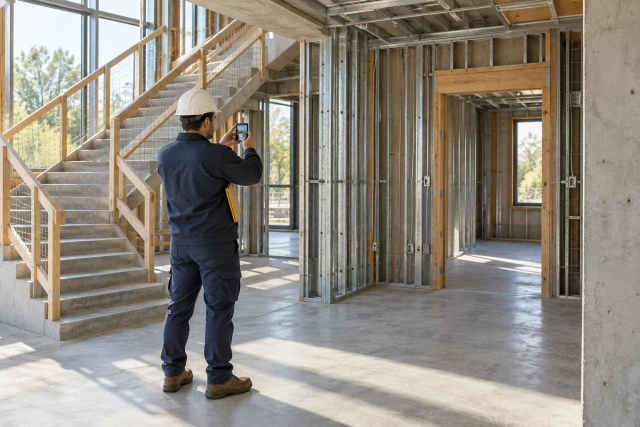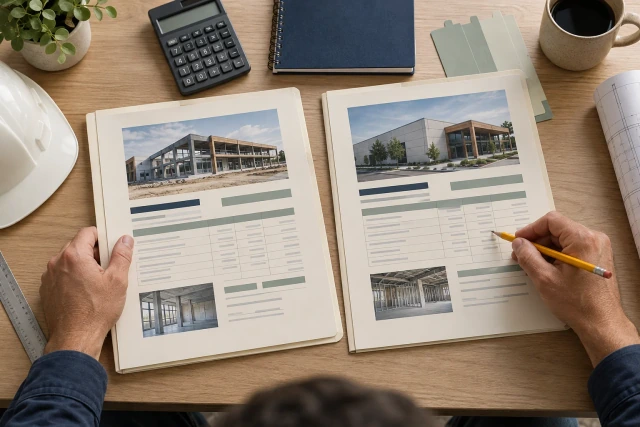
A roofing supplement documentation packet should identify the actual estimate versions, specific scope differences, genuine observation and measurement sources, supporting records, responsible reviewer and permitted submission channel. Keep contractor pricing, factual evidence, coverage review and payment decisions separate. The aim is a clear, accurate record of the proposed change; a larger estimate or a complete photo folder does not establish coverage, approval or an entitlement to payment.
What to take away
- Compare specific estimate versions rather than an unlabeled difference in totals.
- Link quantities and observations to original, location-specific evidence.
- Show proposed changes, unresolved questions and reviewed outcomes separately.
- Stay within the actual contractor role and use the permitted claim or project communication process.
Define the packet as a factual scope record
Begin with the property or project reference, relevant claim reference where appropriate, intended purpose and responsible preparer. Identify the contractor estimate and other source estimate versions being compared. A packet should explain a particular proposed change rather than simply asking someone to increase a total.
Separate the contractor’s factual work account and pricing from insurance coverage, policy interpretation and settlement decisions. The relevant roles and communication rules depend on the actual situation and jurisdiction. Preserve those boundaries in the packet owner, recipient and review process.
Use genuine project records. An observation, measurement or price should have an identifiable source and version. Do not invent damage, backdate evidence, add unsupported scope or present a generated illustration as a property record. The fictional worked example in this guide explains organization and arithmetic only.
Confirm the contractor’s actual role before sending
Identify who can prepare factual contractor records, who reviews them and which person is permitted to communicate through the claim or project channel. A document coordinator can collect a missing quantity source without assuming authority to represent a policyholder on coverage or negotiate a settlement.
Texas Department of Insurance guidance provides a specific jurisdictional example: a contractor doing the work cannot also act as a public insurance adjuster on that claim. Its guidance warns against offering claim-settlement negotiation or representing the policyholder on coverage issues. Use the actual applicable rules and responsible advice for your situation.
Keep the packet’s wording aligned with its purpose. A proposed contractor scope difference should not be described as money the insurer owes or a guaranteed recovery. Route policy or coverage questions to the appropriate authorized party rather than converting them into contractor assertions.
Sources: Texas Department of Insurance: Roofing and insurance, role boundaries
Freeze the estimate versions before comparing
Record each estimate’s issuer, date, version, scope and relevant assumptions. Preserve the original files in the approved destination. A comparison between an early draft and an unmarked later total can conceal whether the difference comes from quantity, unit price, added scope or a changed assumption.
Build a line-level relationship where the sources allow it. Keep the original description, quantity, unit, rate and extension, then show the proposed revision and its source. Do not overwrite the earlier estimate so the reviewer can no longer identify what changed.
If the estimates group work differently, explain the mapping question. A combined line in one source may not be directly comparable to several lines in another. Avoid forcing a false match or counting overlapping scope twice merely to produce a clean difference column.
Preserve original observations and location context
Connect each supporting image or field record to the property, area, item, source person and date basis. Keep the original file and distinguish a markup, caption or later explanation from the observation itself. A close-up without context can be difficult to connect to the proposed line item.
Do not infer cause, quantity or coverage from an image alone. Ask the responsible person for the actual measurement or observation basis required for the review. If the record is incomplete, show the gap and next owner rather than supplying a plausible number to finish the packet.
Keep access and field documentation within the authorized, safe project process. This guide does not direct anyone to climb a roof, disturb materials or expose a condition. The useful administrative task is organizing records supplied through the actual responsible field and review process.
Make the quantity and unit basis explicit
For each proposed change, record the measurement source, unit, location, scope boundary and relevant calculation. Use units that match the source estimate and explain any authorized conversion basis. A count of images is not a count of distinct installed items, and a duplicate attachment should not add quantity.
Separate observed quantity, proposed billable quantity and reviewer disposition. They can answer different questions. A field record may support what was reported without deciding whether the work belongs in a particular estimate or whether a price is accepted under the applicable commercial process.
Where the proposed quantity relies on a plan or takeoff, retain the version and assumptions. If another person supplies a corrected measurement, keep the correction source and earlier basis. The reviewer should be able to reconstruct the current number without guessing which file or calculator entry the preparer used.
Worked example: a $405 proposed scope comparison
All quantities, prices, descriptions and references below are fictional. Estimate A contains six flashing units at $110 each, three vent units at $95 each and 150 square feet of a separately defined underlayment scope at $1.80 per square foot. The simplified subtotal is $1,215. Taxes, other work and commercial adjustments are excluded.
Proposed estimate B contains eight, four and 200 of those same respective units at unchanged fictional rates. Its simplified subtotal is $1,620, a $405 difference: $220 for flashing, $95 for vents and $90 for underlayment. This arithmetic compares the stated exercise lines; it does not establish observed damage, accepted scope or insurance coverage.
The flashing difference has a referenced field account. The vent count remains unresolved because two images may show the same item. The underlayment difference needs its measurement basis. Keep those evidence states beside the proposed amounts instead of describing the entire $405 as approved or collectible.
| Line / unit | Estimate A | Proposed B | Difference / evidence state |
|---|---|---|---|
| Flashing / units | 6 × $110 = $660 | 8 × $110 = $880 | $220 / field-account reference supplied |
| Vents / units | 3 × $95 = $285 | 4 × $95 = $380 | $95 / distinct-item count unresolved |
| Underlayment / square feet | 150 × $1.80 = $270 | 200 × $1.80 = $360 | $90 / measurement basis needed |
| Simplified subtotal | $1,215 | $1,620 | $405 / proposed comparison only |
Build a packet index around the actual questions
Index the comparison, source estimates, genuine field records, measurement references and any other documents the actual recipient requests. Use a stable reference for each item and connect it to the relevant line or scope question. A large unlabeled photo archive can make the reviewer rediscover the packet’s purpose.
For the fictional vent line, identify the two images and ask the responsible source whether they show distinct items. Do not remove one image merely because it complicates the quantity, or count both as separate units without support. Preserve the clarification and current comparison version.
Use only relevant authorized records. A manufacturer document, project requirement or another technical reference may support a particular question, but it should not be attached as a substitute for confirming applicability. Route substantive technical or code questions to the actual responsible professional rather than writing an unsupported claim in the packet.
Review facts, arithmetic and role boundaries separately
Have the responsible preparer or reviewer check the source versions, line mapping, quantities, units, rates, extensions and exclusions. Make unresolved evidence explicit. A correct subtraction does not prove that the proposed quantity is factual, required or accepted, so the arithmetic check should not clear the evidence question.
Review the intended recipient and wording under the actual permitted role. The factual contractor record should remain distinguishable from a coverage position or settlement demand made by an authorized party. Do not add a broad representation sentence merely because it appears in another company’s template.
Record the review outcome and the packet version it applies to. If a quantity changes afterward, preserve the correction and obtain the necessary renewed review. An approval to send version 1 should not silently authorize a materially different version 2 with new scope or unsupported evidence.
Use the actual communication channel and retain the receipt
Confirm the appropriate channel and authorized sender for the specific claim or project process. Record the packet version, recipient, actual transmission event and receipt reference. A prepared folder, unsent email or failed upload should not become a submitted date.
Travelers’ public property-claim guidance tells its customers to contact their claim professional if repairs may cost more than the insurer’s estimate. Use that as a bounded example of following the actual carrier’s process, not a universal submission rule or a promise that any proposed difference will be paid.
If the recipient asks for another record, retain the request and connect it to the affected line. A submission receipt and a request for more information are different from a coverage or payment decision. Use the actual response and responsible parties to determine the next step.
Sources: Travelers: Property claim process and estimate-change contact
Keep reviewed scope and payment records distinct
When a response arrives, record its source, version, stated scope and any remaining question. Avoid translating a partial response into acceptance of the whole packet. The reviewer may address one line while another remains unresolved, or ask for a revised comparison without making a final decision.
Update the current view while retaining the original proposal and response history. If the fictional vent count is corrected from four to three, the proposed subtotal decreases by $95 to $1,525, and the difference from A becomes $310. That revised arithmetic still does not establish accepted scope or payment entitlement.
Track actual contract authorization, invoicing and payment through their own required sources. An insurer estimate, a contractor proposal and a deposited payment can have different scope and terms. The coordination register should preserve the relationships without automatically converting one document into another type of decision.
Use the free roofing-documentation comparison register
The blank CSV includes property and packet reference, purpose and permitted role, source estimate versions, line mapping, original and proposed quantities, units, rates, conditional differences, evidence references, unresolved questions, review source, submission receipt and actual response. Keep private claim information in the approved controlled destination.
Enter the three fictional lines and retain the $1,215 and $1,620 subtotals. Add the vent clarification and check the conditional revision to $1,525 and $310. The source for the quantity correction should remain visible, and no payment-approved state should appear merely because the calculation changed.
Pilot one factual scope question with the responsible contractor reviewer and appropriate recipient process. Ask another person to reconstruct the proposed difference from the source records. Resolve unclear item mapping, duplicate evidence and sender authority before expanding reminders across multiple jobs.
Coordinate missing roofing records with Buildalytic
Buildalytic’s custom-workflow page describes requests, logged follow-up, waits and named approval steps. Bring a redacted estimate comparison and one missing quantity or source-record question to a demo. Ask how the request reaches the responsible field or office contact and returns to the correct packet.
Demonstrate a distinct-item question, a missing measurement reference and a revised packet awaiting the authorized reviewer. Confirm the supported document connections, permissions and permitted communication process for your setup. The workflow should preserve the factual source and open question rather than generate damage evidence or decide coverage.
The useful demonstration shows traceable preparation and follow-up ownership. Technical scope, contract authorization, insurance adjusting and coverage or payment decisions remain with the actual responsible parties. The fictional arithmetic does not claim increased recoveries, a guaranteed supplement or an existing customer outcome.
Common questions
Does a higher contractor estimate establish an insurance supplement payment?
No. Preserve the factual scope and pricing comparison, then follow the applicable review process. Coverage, authorization and payment require their actual responsible sources and decisions.
Can two photos be counted as two damaged items?
Only use the actual supported quantity basis. Two images may show the same item; retain the clarification and avoid duplicate quantity.
Can a roofing contractor negotiate coverage for the homeowner?
Confirm the applicable rules and permitted role. The cited Texas guidance prohibits a contractor doing the work from also acting as public insurance adjuster on that claim.
Sources and editorial notes
- Texas Department of Insurance: Roofing and insurance, role boundaries
- Travelers: Property claim process and estimate-change contact
- Buildalytic custom construction workflows
Prepared with AI assistance. Reference date: 2026-10-29. Worked examples are illustrative and are not customer results. Product details can change; confirm the current scope and terms before rollout.
How we prepare and update field notesBring an estimate difference with a missing source record
Bring a redacted comparison and unresolved quantity or evidence question. We will map the request, actual reviewer and packet follow-up using your permitted process and supported connections.
Start with the call, text or record your team already handles. Review the expected outcome and the human handoff before choosing a rollout.
Request a roofing-documentation workflow demo Explore the relevant capability