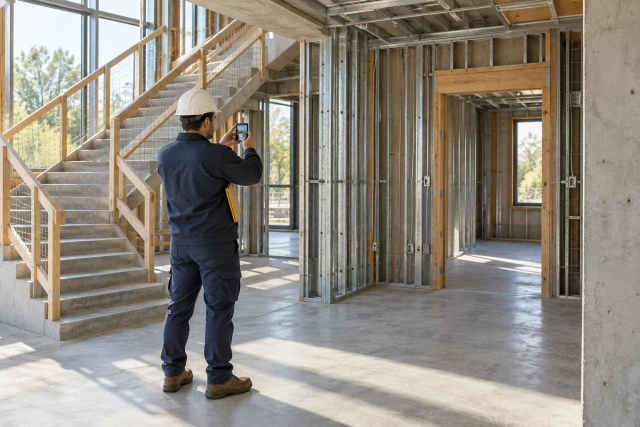
A firestop documentation checklist should link each identifiable location and condition to the actual project-reviewed system or other authorized design record, applicable document version, responsible installer, evidence and required inspection or review result. Keep product information, design review, installation reports and acceptance separate. The register helps retrieve the basis and route missing information; it does not select a firestop system, issue an engineering judgment or certify an installation.
What to take away
- Use a stable location ID and a current source reference for each recorded condition.
- Keep product data separate from the reviewed system or design basis.
- Preserve installer statements, inspection findings and final decisions as distinct records.
- Route changed or unmatched conditions to the actual responsible professional or authority.
Define the documentation problem before collecting more files
A project can have a large firestop folder and still be unable to identify which reviewed record applies to a particular location. Start with the retrieval question: can the responsible reviewer find the current basis, installation account and required review result for this specific condition?
Use the project’s actual requirements to define the record. Identify the responsible design, installation and inspection parties, their document destinations and the accepted location structure. The coordinator should understand who answers a missing-information question without taking over the technical decision.
Keep the purpose narrow enough to test. A location register can connect documents and expose gaps. It cannot establish that a field installation matches a listed system merely because a file has been attached. The substantive determination belongs to the appropriate professionals and authority under the actual project process.
Distinguish system references from product data
The International Firestop Council explains that a firestop product is tested as part of a specific construction system and that generic product information is not a substitute for a listed system. Its guidance connects project submittals and intended field conditions. Use that bounded context to organize the required documentation.
Record the actual project-reviewed system or authorized design reference and its version. Keep product data as a separate supporting record. A familiar product name or color does not identify the correct design basis for every opening or joint, and an attached catalogue should not fill an unresolved system-reference field.
Ask the actual responsible reviewer to resolve applicability. The checklist should preserve the question and source rather than selecting a system by similarity. Do not generate technical installation criteria, substitute materials or an engineering judgment from an administrative document register.
Sources: International Firestop Council: Firestop Systems Explained, documentation and project review context
Give each recorded condition a meaningful location
Use a stable location ID with the building, level, room, grid or other accepted project reference. Link the relevant drawing and revision. A photograph of a repeated condition can be difficult to place later if the only description is pipe penetration or second-floor corridor.
Identify the scope the row actually covers. If the project groups several conditions, preserve the relationship and the responsible reviewer’s basis for that grouping. Do not let a broad row imply that unrelated openings, joints or areas share the same approved design or inspection result.
Keep location corrections traceable. If an installer reports that a photo was assigned to the wrong room, retain the clarification and correct the current association without rewriting the original file. The next reviewer should be able to distinguish an updated location reference from a changed physical condition.
Keep the reviewed design record current
Capture the document source, identifier, revision, review outcome and scope. Use the actual project’s terminology rather than translating every reviewed file into approved for all conditions. A submittal response may include limitations, comments or another required action that the field team needs to see.
When the design basis changes, identify the superseded record and affected location rows. Preserve the earlier version and the source of the change. A file modification timestamp alone does not show that the responsible person reviewed the replacement or that it applies to an installation already recorded.
Where the applicable basis remains unresolved, assign the question to the appropriate design or technical owner. Keep an engineering-judgment request distinct from an issued and appropriately reviewed document. A request email, draft or product representative’s informal message should not be relabeled as a completed professional decision.
Collect the installer account with its source
Ask the responsible installer for the location-specific records required by the project. Identify who supplied the account, the reported work date, referenced design record, relevant product or other supporting records and any exception the installer reports. Keep the statement attributed to its source.
An installer’s completion statement can start the required review without becoming an inspection result. If the statement refers to an older document or leaves the location unclear, ask for that specific clarification. A general reminder to resend all firestop documents can produce duplicate files while leaving the actual mismatch unresolved.
Keep technical methods and acceptance criteria in the actual approved documents and responsible process. The administrative checklist should not invent a field procedure, infer measurements from a photograph or tell an installer how to adapt a system to a condition the design record does not address.
Worked example: four locations and three different open gaps
The location IDs, design references and records below are fictional. Cedar’s register contains four rows. F-41 has a current project-reviewed reference and installer photos, but its required inspection result is pending. F-42 has product data only, with no confirmed applicable system reference.
F-43 has a request for technical disposition of a changed condition; no issued decision has been supplied. F-44 has a current reviewed reference and a retained required review result for its specifically stated scope. Two rows have current reviewed-basis references, but only F-44 has the required result recorded at this checkpoint.
The coordinator asks for F-41’s actual review record, routes F-42’s missing-basis question to the responsible professional and tracks F-43’s outstanding disposition. The exercise does not select a system or find any real installation acceptable. It shows how different missing records create different next actions.
| Location row | Current source record | Open action |
|---|---|---|
| F-41 / level 2 zone A | Reviewed basis v2; installer evidence | Required inspection result pending |
| F-42 / level 2 zone B | Product data; system basis unresolved | Responsible professional resolves applicable reference |
| F-43 / level 3 zone C | Changed-condition disposition requested | Await actual issued / reviewed decision |
| F-44 / level 3 zone D | Reviewed basis; required result retained for stated scope | Retain complete source relationship |
Link photos to the condition and review question
Preserve original images and their stable references, location context, source and date basis. Follow the evidence requirements identified by the actual reviewer. A detail image can support a record while leaving the broader location or a required inspection observation unresolved.
Do not create or alter images to imply a condition that was not observed. A markup or caption should remain distinguishable from the original image. If a replacement photo is supplied, identify what it addresses and retain the earlier file so another person can understand the sequence.
Ask for evidence that answers the specific gap. For F-42, more photos alone may not resolve the missing applicable design basis. For F-41, the missing record is the required review result. The register should route those questions to the right owner instead of treating every incomplete row as a photography task.
Preserve the actual inspection or review result
Record the required event, responsible inspecting or reviewing party, location and scope, date basis, source report and actual disposition. Keep any limitations or correction comments linked to the row. A visit, an installer statement and a completed acceptance record are different events.
Use the project’s actual inspection and authority requirements. The coordinator should not infer an approval because no comment has arrived, or because another nearby location received a favorable result. If the report’s scope is unclear, ask the designated reviewer to clarify what the record covers.
Track corrections through their required response and review steps. A new completion statement should identify the comment it addresses. Preserve the subsequent review outcome rather than replacing the original finding with a generic complete label. The history helps the team identify the basis for the current state.
Route changed conditions before relying on an old record
A later field change can affect the relationship between the recorded condition and its reviewed basis. Preserve the changed-condition report, affected location, source and responsible owner. Follow the actual project process for technical evaluation and any required inspection or authority action.
Do not treat the earlier review result as automatically covering the change. Likewise, do not rewrite the earlier record to make it look as though the revised condition was always the one reviewed. Link the new question to the old record and identify which decision remains outstanding.
For F-43, the useful next action is obtaining the appropriate issued disposition and required review. A draft request can stay in the record as evidence of the question while remaining visibly unresolved. The administrative workflow should not fabricate an engineering judgment or choose a convenient system to clear the queue.
Report document gaps by next action
Show separate counts for location rows with a current reviewed basis, installer evidence, required inspection result and unresolved comments. In the fictional four-row register, two rows have the reviewed-basis reference and one has the required result retained. Those counts describe record availability, not the percentage of compliant firestopping.
Group follow-up by the missing action: technical basis, installer clarification, inspection result or correction review. The owner of each action can be different. A single missing documents label can send a technical question back to the installer or repeatedly ask for evidence already present.
Review the summary against the actual source rows before sharing it. If F-41 receives a report with an open comment, the result-present count may change while the required closure remains pending. Make the status definitions understandable to the field team and reviewer rather than relying on a color alone.
Use the free firestop document register
The blank CSV includes location ID, work scope, drawing reference, applicable reviewed system or design record, version and review source, installer account, evidence references, inspection event and result, changed-condition question, correction and next owner. It is a document-coordination register, not a technical design or acceptance checklist.
Enter F-41 through F-44 and test a corrected location, a replacement design record and a report with an open comment. Each update should preserve the original source and identify the current record. None should automatically establish a broader approval than the actual reviewer recorded.
Pilot one bounded area with the project’s responsible design, installation and review parties. Ask another team member to retrieve the applicable basis and current open question for a selected row. Resolve ambiguous references and review roles before expanding reminders across the project.
Coordinate missing firestop records with Buildalytic
Buildalytic’s custom-workflow page describes requests, logged follow-up, waits and named approval steps. Bring a redacted location row and one missing system-reference, installer-evidence or review-result question to a demo. Ask how the request reaches the responsible person and stays linked to the project source.
Demonstrate F-41 awaiting a result, F-42 awaiting a technical basis and F-43 awaiting an issued disposition. Confirm the supported document connectors, permissions and reviewer handoff. The workflow should preserve the actual source and unresolved state instead of generating a technical answer to complete the row.
The useful demonstration is traceable coordination around the required professional process. System selection, engineering judgments, installation assessment and acceptance remain with the appropriate responsible parties. The fictional register does not claim certified firestopping, avoided defects or a verified customer result.
Common questions
Is a product data sheet enough to identify the firestop system?
Keep product information separate from the actual applicable reviewed system or authorized design record. Ask the responsible professional to resolve a missing basis.
Can a photograph prove a firestop installation is accepted?
A photograph can support the record. Preserve the actual required inspection or review result and its scope separately.
What should happen when the field condition changes?
Record the change and route it through the project’s responsible technical and review process. Do not assume an older document or result automatically covers the changed condition.
Sources and editorial notes
- International Firestop Council: Firestop Systems Explained, documentation and project review context
- Buildalytic custom construction workflows
Prepared with AI assistance. Reference date: 2026-10-29. Worked examples are illustrative and are not customer results. Product details can change; confirm the current scope and terms before rollout.
How we prepare and update field notesBring a firestop location with an unclear document basis
Bring a redacted location register and missing-record question. We will map the request, actual responsible reviewer and source-linked follow-up using your process and supported connections.
Start with the call, text or record your team already handles. Review the expected outcome and the human handoff before choosing a rollout.
Request a specialist-records workflow demo Explore the relevant capability