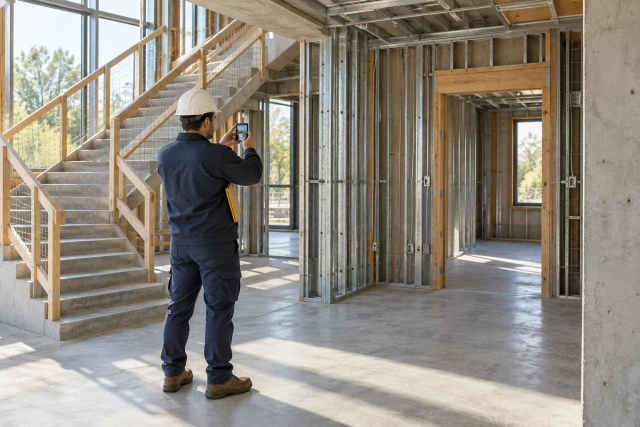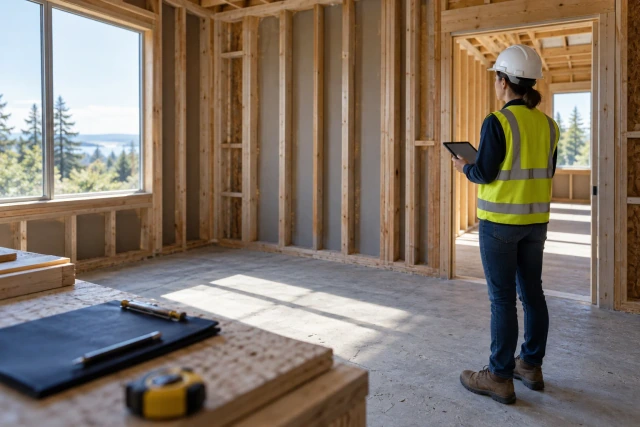
An owner-representative construction daily report should identify its author, observation window, areas visited, direct observations, attributed statements, supporting records and unresolved questions. Keep the owner-side account distinct from the contractor’s report and from inspection, payment or contractual decisions. Use the actual services agreement and project process to determine the representative’s role, distribution and authority; a daily record does not automatically establish acceptance or responsibility.
What to take away
- State when and where the representative actually observed the work.
- Label contractor statements and document references separately from direct observations.
- Preserve differing accounts without turning an unexplained difference into a finding.
- Give unresolved questions an owner and link later corrections to the original report.
Define the representative’s reporting role
Start with the actual services agreement, project communication process and responsible owner contact. Identify what the representative is engaged to observe, review or coordinate and who receives the report. A familiar job title should not silently expand the person’s contractual authority.
CMAA’s 2025 publication on CM/PM responsibilities explains that roles vary with project delivery method. This is useful context for checking the actual engagement, not a universal duty list for every owner representative. Keep the report’s purpose and limitations tied to the project’s real arrangements.
Separate documentation from other decisions. The daily record can support later review without automatically approving work, directing the contractor, certifying payment or deciding a claim. Identify where a substantive question belongs so a reader can distinguish the author’s account from a decision that another party must make.
Sources: CMAA: Understanding Your Role, CM/PM responsibilities by delivery method, 2025 edition
Record the actual observation window and coverage
Identify the report date, author, time basis, periods on site and areas visited. A representative present for two hours has a different observation window from a full-shift contractor record. The report should make that boundary visible rather than implying continuous observation of the whole project.
List areas or activities not observed where that matters to a reported statement. An area may be inaccessible, outside the visit scope or visited at another time. Preserve the actual reason if known. Do not turn not observed into did not occur or assume that an unvisited location was complete.
Use stable project and location references. Another reviewer should be able to relate the account to the correct building, level, room or work area. If the author later corrects a location or time, retain the clarification and its source rather than rewriting the original entry without history.
If weather or access conditions are included, identify the actual basis and observation period. An off-site weather source can support context while remaining distinct from what the author experienced at the location. A note about rain during a short visit should not automatically establish lost production for the entire day. Preserve the related source and any contractor account separately, then route an impact question through the actual schedule or commercial review process.
Label the basis of every material statement
Use clear categories such as directly observed, reported by a named source, referenced document and question requiring review. The labels help a reader understand how the information entered the record. They should describe the evidence basis, not assign an automatic credibility score.
For an attributed statement, identify the speaker or organization, relevant role, time and source message or conversation reference. A foreman’s report can be valuable while remaining a foreman’s account. Do not convert it into an owner-side observation merely because the coordinator summarized it.
For a document reference, preserve its identifier and version. Reading a delivery ticket is different from witnessing the delivery, and reviewing an inspection report is different from performing the inspection. The daily record should retain those distinctions so later users do not rely on it for a fact the author did not observe.
Describe activities with location and time context
Record the specific activity or condition the author actually observed, with enough location and time detail to retrieve it later. Avoid broad conclusions such as all finishes complete when the visit covered only part of an area. A concise factual note is more useful than a sweeping summary without its basis.
Keep progress statements scoped to their source. If the contractor reports completion elsewhere, label the statement and identify any required follow-up. A reported percentage or milestone should not be presented as an independent measurement unless the author actually has the appropriate source and basis.
Use the project’s actual technical and safety reporting channels for urgent or substantive matters. A daily note should not replace an immediate required communication. The administrative report can reference the action and responsible recipient without inventing technical directions or implying that the owner representative controls the contractor’s means and methods.
Keep workforce and delivery counts comparable
If the report includes people, equipment or deliveries, identify what was counted, where and when. A snapshot of six people in one area at 09:10 is not directly comparable with a contractor’s full-day workforce total across several areas. Preserve the definitions before treating the difference as an exception.
Likewise, observing two truck arrivals during a visit does not establish that only two deliveries occurred that day. A later ticket may describe another time or location. Ask for the relevant source and keep the actual observation window visible rather than accusing another account of being wrong from an incomplete comparison.
Avoid using a count as proof of hours worked, productive output or billing entitlement. Those questions need their own actual records and review. The daily report should state what was observed and identify where an unresolved reconciliation belongs.
Worked example: four entries with four evidence paths
The project, locations, times and source references below are fictional. On November 23, 2026, the representative visits Cedar’s west area between 09:00 and 11:00. Entry OR-41 records six people observed there at 09:10. The contractor’s eight-person daily total is retained separately because its coverage and period differ.
OR-42 records the contractor’s statement that the north corridor is complete; the representative did not visit it. OR-43 references a delivery ticket received after the visit, without claiming the author witnessed the delivery. OR-44 records a question about a location reference that needs clarification from the project team.
The report preserves all four entries with their actual bases. It does not calculate two missing workers, find a false completion statement or infer a delivery did not occur. The next actions address the specific source or scope question rather than forcing all accounts into one unsupported narrative.
| Entry | Evidence basis | Scope / next action |
|---|---|---|
| OR-41 | Direct observation / west area 09:10 | Six people observed; contractor daily total has another basis |
| OR-42 | Contractor statement / north corridor | Not visited by representative; retain attribution |
| OR-43 | Document reference / delivery ticket | Author did not witness event; retain source version |
| OR-44 | Location-reference question | Assigned project owner clarifies the record |
Connect photographs to the actual entry
Preserve original images, source, location, capture context and the report entry they support. A general folder of project photos can make it difficult to tell which image relates to a particular observation. Use stable references rather than relying only on a convenient filename.
Distinguish the photographer, sender and uploader when they differ. A photo supplied by a contractor is not automatically the representative’s own observation. If the date or location is uncertain, preserve that uncertainty and ask the responsible source to clarify it.
Keep annotations separate from original files. A markup can explain an area or question without becoming evidence that a hidden condition existed. The daily report should not infer technical compliance, measurements or acceptance from an image where the actual process requires another record or designated review.
Preserve differing accounts and ask a bounded question
When two accounts differ, retain both with their source, time, scope and relevant version. Start by checking whether they describe the same event or period. A broad disagreement label can obscure a simple difference in observation coverage, location naming or reporting cutoff.
Ask the actual missing question: Which area does this completion statement cover? Does the delivery reference concern the afternoon after the visit? Which source confirms the corrected location? A focused request is more useful than asking someone to reconcile the entire daily report without identifying the gap.
If the question remains substantive or disputed, route it to the responsible owner under the actual project process. Do not decide fault or entitlement merely to close an administrative queue. The report can preserve an unresolved issue while making the next action and decision owner clear.
Keep action follow-up separate from findings
For each open question, record the responsible owner, requested response, actual checkpoint and source relationship. A report can contain an observation with no action, a clarification request or a reference to a formal project issue. Those entries should remain understandable rather than all receiving the same overdue status.
When a response arrives, retain its source and scope. It may clarify the record without resolving a technical or commercial question. A coordinator should not translate every reply into accepted or closed if another designated review remains required.
Link the daily entry to the actual RFI, inspection record, meeting action or other process where appropriate. Do not create a duplicate decision history in the daily report. The reader should be able to follow the relationship and identify the current source for the substantive outcome.
Version corrections and report distribution
Before distribution, have the responsible person check attribution, dates, locations, source links and unresolved questions. Preserve the author’s actual account rather than editing it into a more confident statement. A review should clarify the evidence basis and recipient needs.
If a correction is issued after distribution, identify the report version, affected entry, reason and actual source. Preserve the earlier record and notify the appropriate recipients through the project process. Do not silently replace the original so a later reader cannot explain why an account changed.
Confirm document permissions and intended recipients. Owner-side notes can contain sensitive project or commercial information. A shared project record should expose only the information appropriate to its purpose and audience, while retaining the controlled source needed by the actual reviewer.
Use the free owner-side daily-evidence register
The blank CSV includes project, author and role, observation window, areas visited, entry ID, evidence category, observation or attributed account, source time and location, supporting reference, unresolved question, responsible owner and report version. It is a coordination aid, not a mandated owner-representative form or professional certification.
Enter OR-41 through OR-44 and test a contractor clarification, a late photo and a corrected room reference. Keep the original observation and the later account distinguishable. The contractor’s daily total should not overwrite the representative’s narrower snapshot, and neither should automatically become a payroll record.
Pilot one reporting day with the representative and owner contact. Ask another reader to identify what the author actually observed, what was reported and what remains open. Resolve ambiguous evidence labels before expanding automated follow-up across the owner’s project portfolio.
Coordinate missing daily-report information with Buildalytic
Buildalytic’s custom-workflow page describes requests, logged follow-up, waits and named approval steps. Bring a redacted daily entry with a missing location, source or contractor clarification to a demo. Ask how the specific request reaches the responsible contact and returns to the report’s evidence record.
Demonstrate a direct observation, an attributed statement and a document-reference question as different paths. Confirm supported document connections, permissions and the actual author or reviewer handoff. The workflow should preserve the accounts rather than merging them into an unqualified project fact.
The useful demonstration shows traceability and clear next-action ownership. Technical acceptance, contractor direction, payment certification and commercial conclusions remain in their actual authorized processes. The fictional report does not claim independent professional verification, fewer disputes or a measured customer result.
Common questions
Should the owner representative copy the contractor’s daily report?
Preserve the contractor’s account as an attributed source while keeping the representative’s own observation window and record distinct.
Does a different workforce count prove the contractor report is wrong?
First compare period, location and counting basis. A short observation window and a full-day total may describe different scopes.
Does a daily report establish acceptance of the work?
Use the actual agreement and project decision process. A daily account and an inspection, payment or contractual decision are separate records.
Sources and editorial notes
- CMAA: Understanding Your Role, CM/PM responsibilities by delivery method, 2025 edition
- Buildalytic custom construction workflows
Prepared with AI assistance. Reference date: 2026-10-29. Worked examples are illustrative and are not customer results. Product details can change; confirm the current scope and terms before rollout.
How we prepare and update field notesBring a daily entry with an unresolved source question
Bring a redacted observation, attributed statement and open question. We will map the request, actual reviewer and source-linked follow-up using your reporting process and supported connections.
Start with the call, text or record your team already handles. Review the expected outcome and the human handoff before choosing a rollout.
Request an owner-report follow-up demo Explore the relevant capability